Source Digital Video Magnifier for Lab, Education, and Industry
Explore 30 digital video magnifier options with varying magnification ranges from 3x to 100x and diverse features like rechargeable batteries and video output. Buyers can compare specifications to find suitable models for teaching, research, and industrial inspection tasks.
Key considerations
Products List
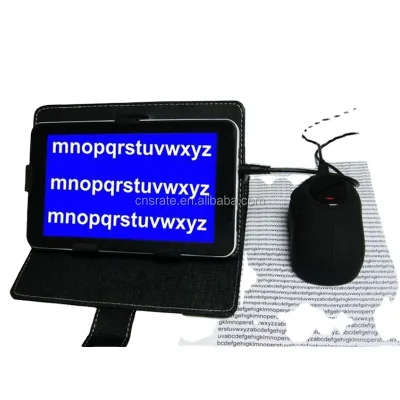
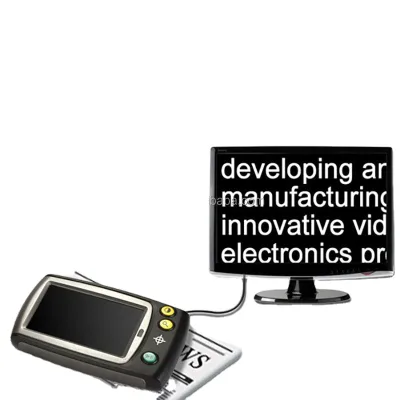


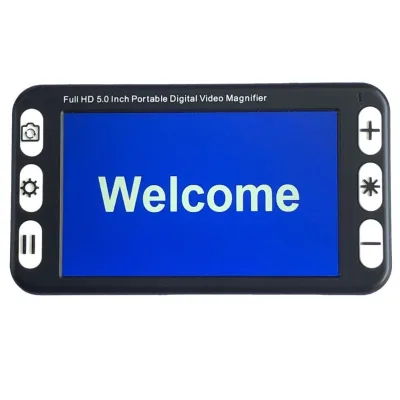


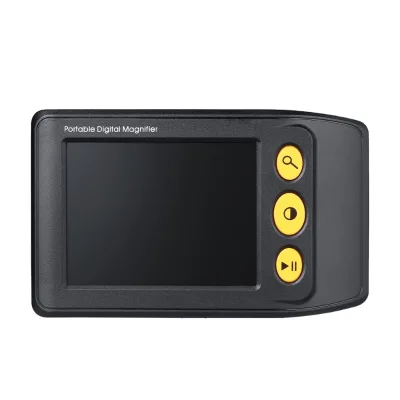


$1999.00 - $3999.00
Moq: 1
Comprehensive Sourcing Guide
Strategic Sourcing Guide for Digital Video Magnifiers
The global market for digital video magnifiers has evolved from a niche laboratory tool into a versatile instrument for industrial inspection, educational research, and precision assembly. For procurement professionals, navigating this category requires a disciplined approach that distinguishes between handheld portable units and stationary desktop systems. The following guide synthesizes available product attributes and industry standards to provide a framework for evaluating suppliers and specifications without relying on unverified claims. Buyers must treat product attributes as observations of specific listings rather than universal guarantees for every unit in the category.
Technical Specifications and Optical Performance
When sourcing a digital video magnifier, the primary technical differentiator is the optical magnification range and the imaging resolution. Market observations indicate a significant variance in capabilities depending on the intended application. For instance, specific models in the current supply chain offer a magnification range of 3-60X, utilizing optical magnification theory to provide clear views of minute details. In contrast, other configurations, such as those designed for general desktop use, may offer a narrower range of 6-25X or higher ranges of 50-100X for specialized industrial tasks.
The resolution of the digital sensor is equally critical. A common specification observed in portable units is QVGA resolution at 320x240 pixels, equating to 0.3 megapixels. While this resolution is sufficient for basic inspection tasks, buyers requiring high-fidelity documentation for quality control should verify if higher resolution sensors are available, as the provided data suggests a wide spectrum of options. The display interface also varies; some units feature a 4.3-inch diagonal screen with a 16:9 aspect ratio, while others rely on a video-out port to connect to external monitors, offering flexibility for shared viewing in a team environment.
Physical dimensions and weight are often overlooked but are decisive factors for mobility. Handheld models, such as those with the model number UM032, are compact, measuring approximately 158x88x25mm and weighing only 185g, making them ideal for field work. Conversely, desktop models like the UM007 are significantly larger, with a screen size of 190x110x10mm and a total weight of 850g, designed for stability on a workbench. The shape of the device also matters; some units are designed as a rectangular prism, while others feature a monocular or binocular drawtube configuration, influencing the ergonomics and the stereoscopic effect perceived by the operator.
Power Systems and Illumination Requirements
Power management and illumination are the operational lifelines of a digital video magnifier. The supply chain data highlights a transition toward rechargeable power sources to ensure uninterrupted operation. Specific listings indicate the use of 3200Ah Lithium rechargeable batteries, a specification that suggests high capacity for extended field use. However, buyers must verify the actual capacity and discharge rate, as "3200Ah" in product listings can sometimes be a marketing descriptor for the battery chemistry rather than a literal ampere-hour rating, which would be unusually high for a handheld device.
Illumination is another critical component. The type of light source varies from ordinary light sources to specialized LED arrays. Some models offer 12 distinct color modes, allowing operators to adjust the lighting spectrum to enhance contrast for different materials, such as metallic surfaces or transparent specimens. Other units provide 7 modes, which may be sufficient for general educational or research purposes. The placement of the light source is also a design consideration; some devices integrate the illumination directly into the lens assembly, while others may require external lighting. Buyers should confirm the brightness levels and the ability to adjust intensity, as poor lighting can negate the benefits of high optical magnification.
Compliance, Certification, and Regulatory Standards
Navigating the regulatory landscape is essential for B2B procurement, particularly when importing equipment from manufacturing hubs in China. The provided data confirms that certain models carry CE, FCC, and RoHs certifications. These certifications are non-negotiable for entry into many international markets. CE marking indicates conformity with health, safety, and environmental protection standards for products sold within the European Economic Area. FCC certification is mandatory for electronic devices sold in the United States to ensure they do not interfere with radio communications. RoHs compliance ensures that the product does not contain specific hazardous substances, which is a requirement for environmental compliance in many jurisdictions.
However, buyers must exercise caution. The presence of a certification claim in a product listing does not guarantee that every unit in a batch is certified. Procurement teams should request valid test reports and certificates of conformity from the supplier before finalizing an order. Furthermore, while some products list a "prod_standard" of dimensions like 450x420x120mm, this appears to refer to packaging or housing standards rather than an international safety standard. Buyers should verify if the product adheres to specific industry standards for medical, industrial, or educational equipment, which may vary by region.
Cost Drivers and Procurement Economics
The pricing structure for digital video magnifiers is highly variable, driven by the complexity of the optical system, the quality of the digital sensor, and the included accessories. Observed price ranges in the market span from approximately $10.29 to $55,000. This vast disparity reflects the difference between basic handheld magnifiers and sophisticated, high-magnification industrial systems with advanced software integration.
Several factors influence the final cost. First, the magnification range and resolution are primary cost drivers; units offering 60X magnification with high-resolution sensors command a premium over those limited to 25X. Second, the build quality and materials, such as the use of aluminum alloys versus plastic housings, affect durability and price. Third, the inclusion of advanced features like multiple color modes, stereoscopic effects, and video output capabilities adds to the unit cost.
Minimum Order Quantity (MOQ) is another economic factor. The observed MOQ range is between 1 and 100 units. For small businesses or pilot projects, suppliers offering an MOQ of 1 are preferable, allowing for low-risk testing. However, larger orders often benefit from economies of scale, reducing the per-unit cost. Buyers should also consider the "Selling Units" configuration; most listings indicate a "Single item" sale, but bulk purchasing agreements may offer different packaging configurations, such as foam and carton packing, which can impact logistics costs.
Supplier Evaluation and Customization Capabilities
Evaluating a supplier for digital video magnifiers requires a deep dive into their manufacturing capabilities and flexibility. The market data indicates that many suppliers offer OEM (Original Equipment Manufacturer) and ODM (Original Design Manufacturer) support. This is a significant advantage for buyers looking to brand the product as their own or customize specific features for a niche application. The ability to customize the product color, such as selecting between black or grey finishes, is a common offering, but buyers should confirm if structural customizations, such as changing the lens mount or adding specific software interfaces, are feasible.
Brand reputation and origin are also critical. While specific brand names like "Srate" and "Kwongkuk" appear in the data, buyers should not rely solely on brand recognition. Instead, they should verify the place of origin, which is predominantly China, with specific mentions of Henan as a manufacturing hub. This location data helps in assessing logistics and supply chain risks. Buyers should also evaluate the supplier's warranty terms; a 3-year warranty is a strong indicator of manufacturer confidence in product longevity, but the terms and conditions of this warranty must be clearly defined, including coverage for parts, labor, and shipping.
Quality Control and Long-Term Procurement Strategy
Implementing a robust quality control (QC) strategy is vital for ensuring that the digital video magnifiers meet performance expectations. Given the variance in specifications, buyers should establish clear acceptance criteria before production begins. Key QC checkpoints include verifying the actual magnification range, testing the resolution on the display, and confirming the battery life under load. The "Freeze and Defreeze" image capability mentioned in some listings should be tested to ensure the system can capture and hold images reliably.
Long-term procurement considerations extend beyond the initial purchase. Buyers should assess the availability of spare parts, such as replacement batteries, lenses, and charging cables. The "prod_packing" of foam and carton suggests a standard packaging method, but for long-term storage and transport, additional protective measures may be necessary. Additionally, the "Video out" capability to any monitor with video-in is a future-proofing feature that allows the device to be used in various setups, extending its useful life.
Buyers must also consider the "Usage" context. Whether the device is intended for teaching, research, or industrial inspection, the durability requirements will differ. A microscope used in a teaching environment may face different wear and tear compared to one used in a high-precision research lab. Therefore, the selection of the model number, such as UM007, UM032, or Sgo-130vx, should align with the specific operational demands of the end-user.
Comparative Analysis of Product Configurations
To assist in decision-making, the following table summarizes the key differences observed between various digital video magnifier configurations based on the provided data. This comparison highlights the trade-offs between portability, magnification, and feature sets.
| Feature | Portable Handheld (e.g., UM032) | Desktop/Stationary (e.g., UM007) | High-Precision Industrial (e.g., Sgo-500HCPX) |
|---|---|---|---|
| Magnification Range | 6-25X | 3-60X | 50-100X |
| Weight | 185g | 850g | Varies (Binocular/Heavy) |
| Display | Integrated or Video Out | 4.3" Diagonal (16:9) | External Monitor Compatible |
| Resolution | QVGA 320x240 | QVGA 320x240 | Varies (Check Specific Model) |
| Power Source | Rechargeable Lithium | 3200Ah Lithium | Rechargeable Lithium |
| Light Modes | 7 Modes | 12 Modes | Ordinary Light / Variable |
| Cylinder Type | Monocular | Monocular | Binoculars |
| Mobility | Desktop/Portable | Desktop | Desktop |
| Certification | CE, FCC, RoHs | CE, FCC, RoHs | CE, FCC, RoHs |
This table illustrates that while portable units offer convenience, they often sacrifice magnification range and resolution. Desktop units provide a balance of features, while high-precision models focus on maximum magnification and stability. Buyers should select the configuration that best aligns with their specific operational needs, ensuring that the trade-offs do not compromise the primary function of the device.
Final Procurement Recommendations
In conclusion, sourcing a digital video magnifier requires a meticulous evaluation of technical specifications, compliance status, and supplier capabilities. Buyers should prioritize verifying the actual performance metrics against the listed attributes, as product listings are observations rather than guarantees. The wide range of prices and MOQs offers flexibility, but the decision should be driven by the specific application requirements, such as the need for high magnification, portability, or advanced imaging features. By adhering to a disciplined procurement process that includes rigorous quality control and supplier validation, organizations can secure reliable digital video magnifiers that meet their operational standards and deliver long-term value.
FAQs
What magnification ranges are available for digital video magnifiers?
Available magnification ranges vary from 3-60X for desktop units to 6-25X for portable models. Some specialized industrial configurations offer higher ranges up to 50-100X. Buyers must select the specific range based on their intended inspection or research application.
Which certifications do these devices typically carry for international sales?
Many listed models carry CE, FCC, and RoHs certifications for compliance in European and American markets. These certifications ensure safety and environmental standards are met. Buyers should request valid test reports to verify that every unit in a batch holds these specific certifications.
Can I customize the color and branding of the microscope?
Yes, suppliers offer OEM and ODM support allowing for customization of product colors like black or grey. Branding options are also available for businesses looking to create a unique identity. Structural customizations may be feasible but require direct confirmation with the manufacturer.
How does the power system work for these portable units?
Devices typically utilize rechargeable Lithium batteries for operation, with some listings specifying high-capacity options. Illumination is provided by ordinary light sources or specialized arrays with multiple color modes. Buyers should verify the actual battery capacity and discharge rates for extended field use.
What is the minimum order quantity for purchasing these microscopes?
The minimum order quantity ranges from 1 to 100 units depending on the supplier and product configuration. Small businesses can often start with a single item for testing, while larger orders benefit from economies of scale. The selling unit is typically listed as a single item.
Where are these digital video magnifiers manufactured?
The products originate from China, with specific manufacturing hubs identified in Henan. This location data helps in assessing logistics and supply chain risks for international buyers. Buyers should verify the specific place of origin for their selected model to ensure accurate shipping estimates.